
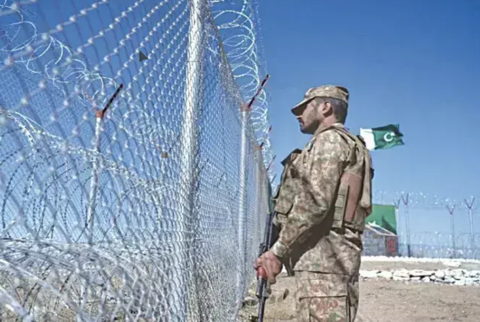
Pakistan on Monday rejected claims by the Afghan Taliban administration regarding civilian casualties in cross-border counter-terrorism operations, reiterating its right to defend its territory against militant networks based in Afghanistan.
In an official statement, the Ministry of Foreign Affairs described the allegations as baseless and unsubstantiated. The ministry said deceptive narratives would neither diminish the threat posed by terrorist groups operating across the border nor absolve Kabul of its obligation to prevent Afghan territory from being used to launch cross-border attacks against Pakistan.
The ministry noted that terrorist assaults planned and executed from Afghan soil had caused more than 3,500 casualties across Pakistan in 2026 alone. It added that thousands of Pakistani civilians and security personnel had been martyred over recent years in attacks facilitated under the watch and patronage of the Afghan Taliban regime.
The Foreign Office emphasized that Pakistan’s counter-terrorism operations were undertaken in the exercise of legitimate self-defence, in full accordance with the principles of necessity and as a last resort. Pakistani officials maintained that all military actions were directed exclusively at armed militants and their logistical bases, observing strict standards of precaution and distinction to avoid civilian harm.
Islamabad urged the international community to hold the Taliban administration accountable for violating its obligations under United Nations Security Council resolutions. Citing findings from UN monitoring bodies, the statement pointed out that Kabul continues to provide sanctuary to multiple proscribed organisations, including the Tehreek-e-Taliban Pakistan, designated by authorities as Fitna al-Khawarij, the Balochistan Liberation Army, and Fitna al-Hindustan.
Tensions between the two neighbouring states have been heightened since October 2025. Last month, Information Minister Attaullah Tarar stated that Pakistani forces had carried out precision aerial and drone strikes against 10 militant locations inside Afghanistan, after hostile drones launched from Afghan soil violated Pakistani airspace in what he termed an unlawful incursion.
The military previously initiated Operation Ghazab Lil Haq in late February 2026 following exchanges of heavy fire along the frontier. Although a week-long ceasefire was established in March on the eve of Eidul Fitr following diplomatic intervention by Saudi Arabia, Qatar, and Turkiye, cross-border violence persisted, with Pakistan recording its highest monthly tally of militant attacks in 12 years during September 2026.
During subsequent negotiations held in Urumqi, China, in April 2026, Pakistan outlined three primary conditions: Kabul must officially proscribe the Tehreek-e-Taliban Pakistan, eliminate militant logistical networks, and present verified evidence of concrete actions taken against these groups. The Foreign Office reaffirmed that Pakistan reserves the right to take all necessary measures to guarantee its territorial integrity and protect its citizens.
https://x.com/ForeignOfficePk/status/2114649541022757324